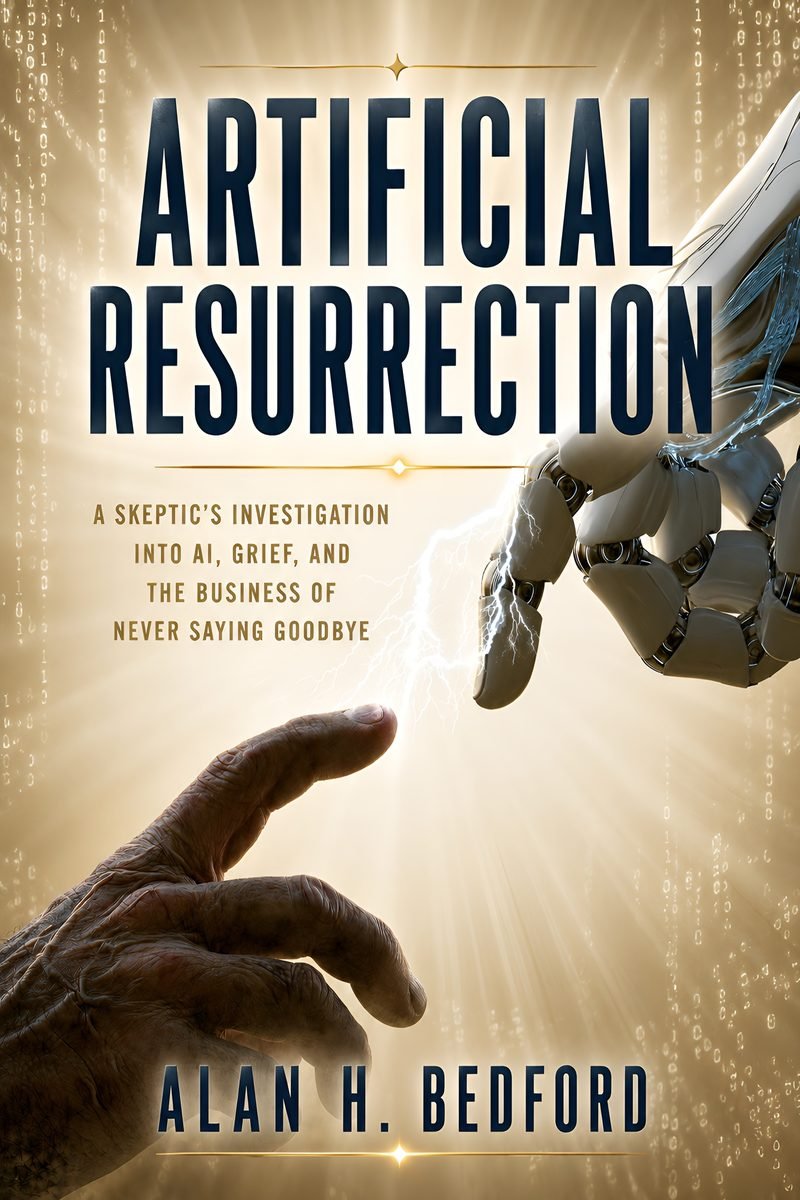
Artificial Resurrection
Ebook
$2.99
$9.99
Kindle Unlimited
Included
Content note: This book discusses death, grief, and real court cases involving violent crime, including details drawn from public trial records.
In an Arizona courtroom in 2025, a dead man forgave his killer. The video was AI, built by his sister from a single photo. The judge thanked the software and handed down the maximum sentence. No law said he couldn't.
Griefbots — AI chatbots trained on a dead person's texts, voice, and photos — now let anyone keep talking to someone they've lost, for a subscription fee. Some of it is genuine comfort, documented by grieving families and researchers alike. Some of it is a company that can raise the price, change the model, or vanish overnight, taking a loved one's voice down with it. Almost nothing in the law has caught up.
Artificial Resurrection follows the engineers, mourners, and entrepreneurs who built this industry, and traces what happens once comfort becomes a product line.
You'll get:
- The real, named history behind Replika, HereAfter AI, and China's booming deadbot market
- What happens to a griefbot when its company goes bankrupt, gets acquired, or quietly updates its model
- What courts, state legislatures, and the FTC do — and don't — regulate about AI recreations of the dead
- What grief researchers and practicing therapists actually find, separated from marketing copy
- Why the funeral industry's century-old sales tactics are the clearest guide to what's happening now
Alan H. Bedford built this account from court records, public reporting, and published research, checked against the industry's own claims at every turn. By the end, you'll have the questions to ask before anyone sells you a version of someone you love. The book doesn't land on a tidy answer. Neither, yet, does the law.